
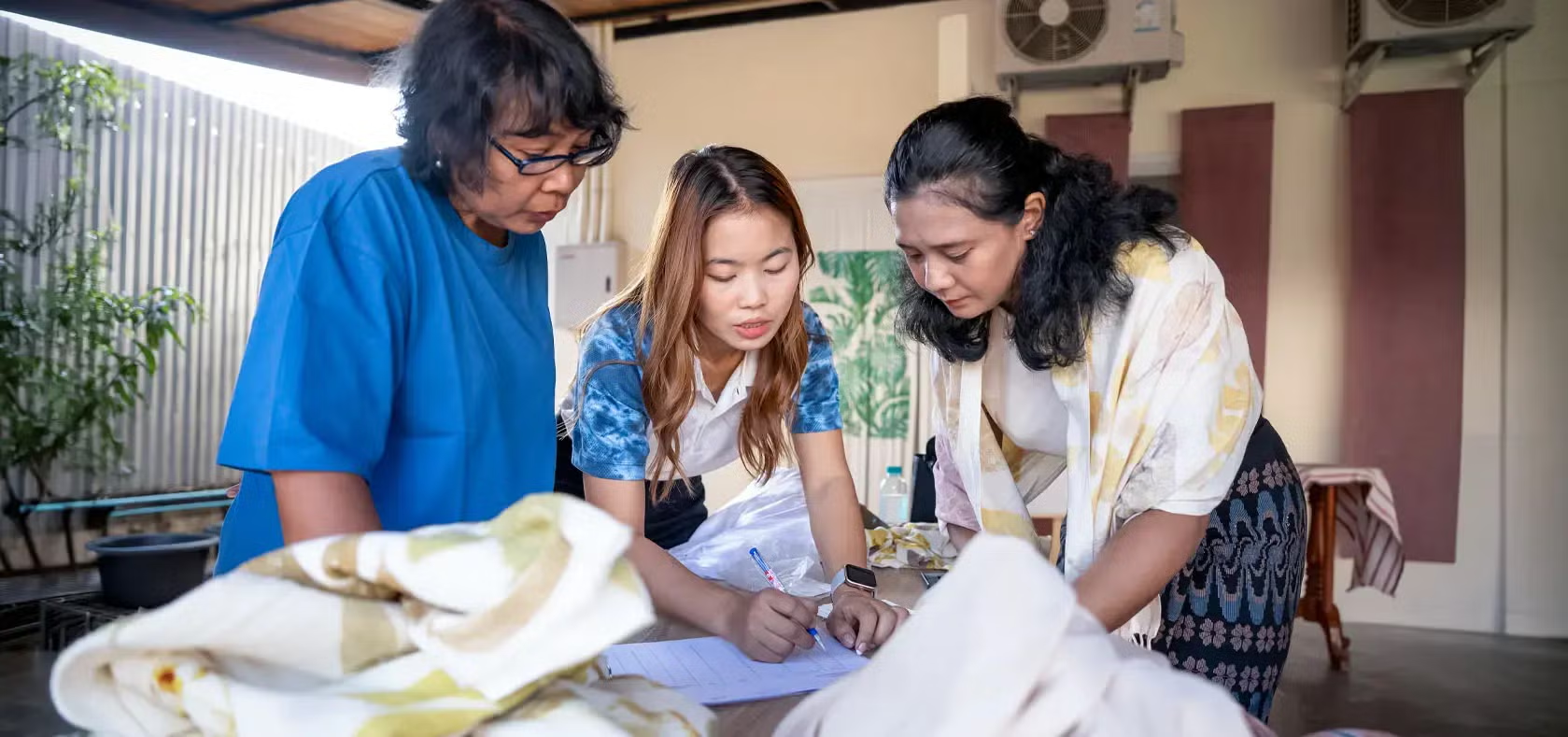
Education as an Equalizer: Nandar Sanlwin’s Journey from Migrant to Mentor
In the border town of Mae Sot, Tak Province, education is more than a classroom experience—it is a lifeline. Nandar Sanlwin, affectionately known as “Dar Dar,” is at the forefront of this movement. As a teacher at the UN Women-supported Women’s Empowerment and Learning Centre (WE Centre), she is proving that social justice begins with a desk and a book.
From Displacement to International Relations
Dar Dar’s story began in 2005 when she arrived in Thailand from Myanmar at just eight years old. Despite the instability of migrant life, she mastered Thai and English, eventually returning to Myanmar to study International Relations.
However, the 2021 military takeover in Myanmar forced her back to Thailand. Rather than letting the disruption end her journey, she redirected her expertise to help other young migrants navigate the same barriers she once faced.
Teaching Beyond the Textbook
At the Help Without Frontiers Foundation, Dar Dar’s curriculum goes far beyond traditional subjects like math and chemistry. She provides specialized training designed to protect vulnerable youth:
- Rights and Safety: Lessons on sexual and reproductive health, preventing gender-based violence, and understanding migrants’ rights.
- Economic Security: Vocational training that prevents young girls (aged 14 to 20) from being pushed into exploitative or hazardous labor.
- Digital Literacy: Teaching students to navigate 2026’s digital landscape, including awareness of AI-related risks and online misinformation.
Social Cohesion in Border Communities
For Dar Dar, diversity is a strength. In a setting where students speak different languages and hold different legal statuses, the WE Centre acts as a bridge. By learning together, these young women build mutual respect, creating a foundation for social cohesion that extends into their neighborhoods.
“Education is an equalizer of rights and access to justice for my students,” says Dar Dar. “With access to technology and training, women can choose safer futures and dignified work.”