
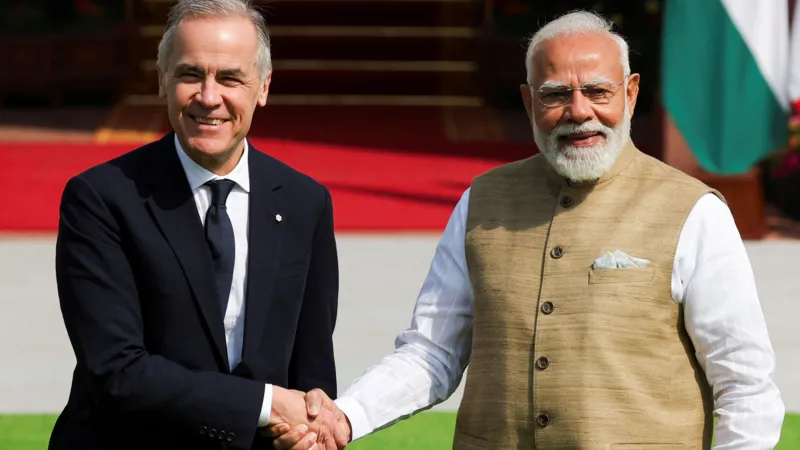
The Strategic Reset: Uranium and Trade
The centerpiece of the visit is a 10-year contract for Canada to supply uranium to fuel India’s expanding civil nuclear program. Both leaders also committed to joint development in Small Modular Reactors (SMRs) and advanced reactor technologies, positioning both nations as “natural partners” in the global energy transition.
Economic Goals and the 2026 Deadline
- Trade Target: Bilateral trade is projected to reach $50 billion by 2030.
- CEPA Progress: PM Carney announced that both governments intend to finalize the Comprehensive Economic Partnership Agreement (CEPA) by the end of 2026.
- Diversification: The move is a pragmatic shift for both; India seeks to diversify energy imports away from Russia, while Canada aims to reduce economic exposure to rising US trade tariffs.
Navigating Diplomatic Shadows
While the mood at Hyderabad House was positive, the shadow of the 2023 Nijjar case remains. Under the Carney administration, relations have cautiously thawed since the Canadian government clarified it currently sees no links between India and violent crimes on its soil.
However, internal tensions persist. Foreign Minister Anita Anand recently distanced herself from claims that all foreign interference had ceased, emphasizing that re-engagement is a “diplomatic necessity” for progress.
Expanding the Horizon: AI and Minerals
Beyond energy, the duo signed several Memorandums of Understanding (MoUs) to solidify a “forward-looking partnership”:
- Critical Minerals: Securing resilient supply chains for semiconductors and EV batteries.
- Space & Tech: Connecting startups in AI, quantum computing, and supercomputing.
- Education: Opening doors for Canadian university campuses to establish a presence in India.