
Inside the Room: Negotiating with Russia After Four Years of War
Speaking from the presidential palace in Kyiv, Kyslytsya described the current tone of discussions as surprisingly “business-like.” Unlike the fiery historical rhetoric often broadcast by the Kremlin, these military dialogues focus on the cold realities of the battlefield.
“The military has a better understanding of what is going on,” Kyslytsya noted. However, the true challenge remains whether those Russian officers are “capable of reporting back directly without cooking the information.”
The “Flintstones” vs. The Drone Age Disengaging two massive armies in 2026 is a technical nightmare. The “grey zone” in eastern Ukraine is no longer just land; it is a sky filled with as many as 12,000 drones operating over a single city like Pokrovsk at any given time.
Kyslytsya compared previous monitoring efforts to the “Flintstones era.” To secure a real ceasefire today, Ukraine is banking on high-tech U.S. resources, including:
Satellite Surveillance: Real-time tracking of troop movements.
Advanced UAV Monitoring: Verifying disengagement in high-density drone zones.
Third-Party Adjudication: A “solid and authoritative” monitor to catch and report violations instantly.
The Trump Administration’s Role While political observers have been skeptical, Kyslytsya offered genuine credit to the U.S. delegation. He highlighted the “patience and commitment” of officials like General Alexus Grynkewich and Secretary of the Army Dan Driscoll.
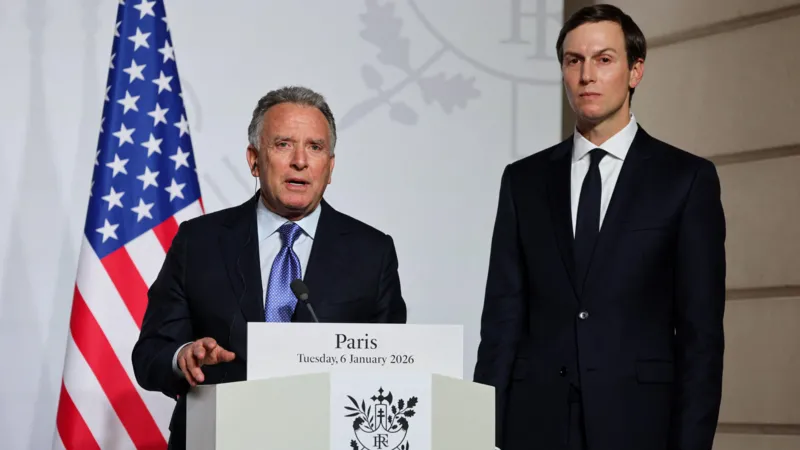
He also pushed back against media caricatures of U.S. envoys Steve Witkoff and Jared Kushner. Kyslytsya described Kushner as “not a novice” and Witkoff as a “wise” negotiator who has been instrumental in keeping both sides at the table.
A History of Confrontation For Kyslytsya, sitting across from the enemy is a practiced skill. He famously led Ukraine’s mission at the UN during the initial 2022 invasion. He recalls the haunting moment on February 23, 2022, when he asked the Russian ambassador to call Moscow to stop the war, only to be told, “I’m not going to wake Minister Lavrov.”
Now back in Kyiv, he remains focused on the mechanics of peace, while acknowledging the ultimate power remains in the Kremlin. “The war could be stopped by just one call from one person to his military chief,” he said, “but the Kremlin dictator is not up to stopping it yet.”